

- Intro: Why Umrah?
- The Four Steps in Umrah
- Step 1 : Ihram
- Step 2 : Tawaf
- Step 3 : Sa’i
- Step 4: Tahallul
- Conclusion
Intro: Why Umrah?
Umrah is a journey that means so much to Muslims all over the world. It’s often called the “lesser pilgrimage,” but don’t let that fool you—it’s just as powerful. Performing Umrah is all about connecting with Allah, seeking forgiveness, and finding a sense of peace that’s hard to find anywhere else. It’s not obligatory like Hajj, but it still holds a ton of significance. It’s a time to hit pause, step away from the chaos of life, and really reflect on your faith. Being in Makkah and Madinah, where everything feels sacred, is an experience like no other. Whether you go for Umrah in the busy season or during quieter times, it’s always a meaningful and life-changing journey that leaves you feeling blessed and spiritually refreshed.
In this blog, I will cover as much information as possible about the steps one needs to follow to fulfill the intention (niyyah) for Umrah. I may include some Urdu or Arabic terms here and there, but don’t worry if you’re not familiar with them; as long as you understand how to perform Umrah, that’s what matters. Towards the end, I will also share some tips that I got to know while performing Umrah.
A kind note to my fellow readers, the information that I am sharing might be crisp and not much detailed on the history behind Umrah. There are tons of material available online for you to understand the significance of Umrah.
I will also write a separate blog just highlighting about the important dua’s that we need to recite when performing Umrah. You can either take a screenshot of it or keep it handy during your Umrah.
Without any further delays let’s dig in to the details of how one can perform Umrah.
The Four Steps in Umrah
When it comes to performing Umrah, there are four main steps that guide you through a meaningful and spiritual journey. Each one has its own significance, helping you connect with Allah and reflect on your faith along the way. Remember these four steps clearly
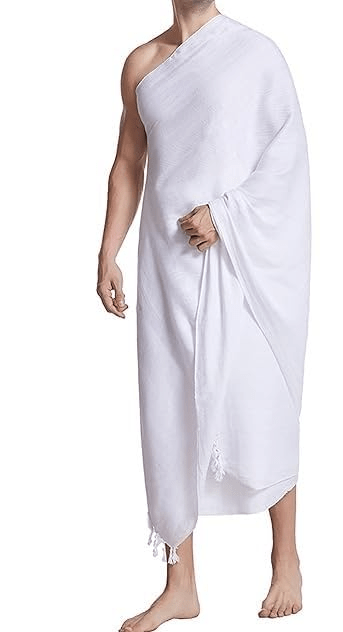
- Ihram – For men 2 unstitched white sheets(Izar & Rida) and modest dress for women
- Tawaf – Walking around the Holy Kaaba seven times
- Sa’i – Walking between Mount Safa and Mount Marwah seven times
- Tahallul – Shaving the head for men and cutting a small portion of hair for women
Step 1 : Ihram
What is Ihram?
Wearing Ihram is a big part of the Umrah (and Hajj) experience, and it’s got some real spiritual meaning. It’s not just about putting on a simple outfit—it’s about getting yourself in the right mindset for the journey ahead. The plain white clothes (for men) or modest dress (for women) represent purity, equality, and humility. Everyone wears the same thing, no matter who they are or what they have, which is a reminder that in Allah’s eyes, we’re all the same. It’s all about focusing on your faith and setting aside everything else for a while.
This is how an Ihram for men looks like:
There isn’t any particular attire for women that they need to adhere to, so any modest clothing must be sufficient. Just ensure that you cover your head with a hijab.
Things to remember while starting Umrah and wearing Ihram
It is important to follow these things before starting Umrah
- Cut your nails on both hands and feet
- Remove body hairs from Armpits and intimate areas
- Take a good bath and don’t apply any kind of perfumes / deodorants / scent to the ihram
- You can apply attar on your skin, but make sure you apply it in areas where your Ihram cloth doesn’t fall (e.g. back of your ears & just beneath your palm)
A point to note here is, you still have not gotten into the state of Ihram though you might have worn Ihram. To get into the state of Ihram, there are few things that you need to remember.
What is the state of Ihram? How to get into it?
The state of Ihram (إحرام) is a special, spiritually pure state that Muslims enter before heading off for Hajj or Umrah. It’s the starting point of this sacred journey and involves getting ready both physically and spiritually. Here’s a simple breakdown of what it means to enter Ihram:
- Reaching Miqat
- Intention (Niyyah)
- Talbiyah
- Restrictions
Miqat in Arabic refers to a specific time or place that has been designated for a particular purpose, especially in the context of pilgrimage. These locations are prescribed by the Prophet Muhammad (PBUH) and serve as boundary points for pilgrims coming from various regions. A pilgrim must be in Ihram when they pass the Miqat, and from that point, they are not allowed to engage in certain activities until the rituals are completed. Look at this map below:
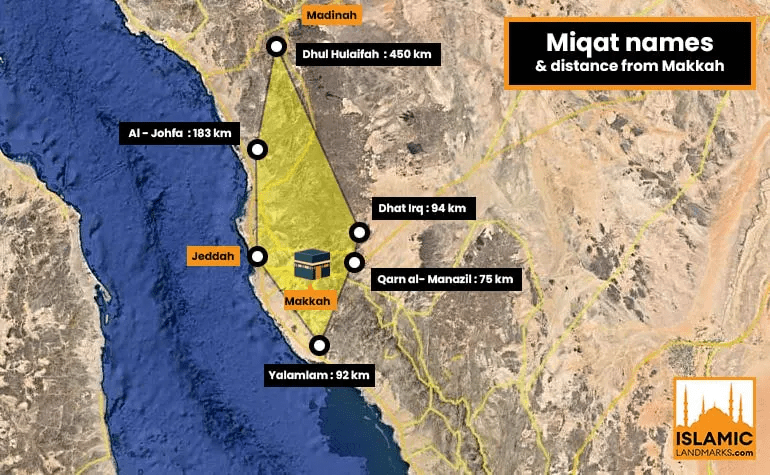
Pilgrims traveling from specific areas are required to wear their Ihram before reaching these points:
- Zulhulaifah (for those coming from Medina)
- Juhfah (for those coming from the western direction)
- Qarn al-Manazil (for those coming from the eastern direction)
- Yalamlam (for those coming from the southern direction)
- Dhat Irq (for those coming from the northern direction)
There are designated Mosques at these Miqat points where you must pray two rak’ahs of Nafl (voluntary) namaaz. For people travelling from different countries by air, you might cross the Miqat points in the flight so it might be difficult to pray while traveling. It is recommended that you perform Wudu and pray your two rak’ahs before boarding the flight.
How to Pray 2 rak’ah Nafl Namaaz?
You start your namaaz with the following Niyyah (any one):
Urdu : Main Allah ke naam par Umrah ke liye do rak’at nafl namaz padh raha hoon
(میں اللہ کے نام پر عمرہ کے لئے دو رکعت نفل نماز پڑھ رہا ہوں)
Arabic : Ana usalli rak’atayn naflah bismillah min ajl al-‘Umrah
(أنا أصلي ركعتين نافلة باسم الله من أجل العمرة)
In the first rak’ah:
After Surah Al-Fatiha, it is sunnah to recite
Surah Al-Kafiroon
Arabic: Qul ya ayyuha al-kafiroon, La a’budu ma ta’budoon, Wala antum ‘abidoona ma a’bud, Wala ana ‘abidun ma ‘abadtum, Wala antum ‘abidoona ma a’bud, Lakum deenukum waliyadeen,
قُلْ يَا أَيُّهَا الْكَافِرُونَ ١ لَا أَعْبُدُ مَا تَعْبُدُونَ ٢ وَلَا أَنتُمْ عَابِدُونَ مَا أَعْبُدُ ٣ وَلَا أَنَا عَابِدٌ مَّّا عَبَدتُّمْ ٤ وَلَا أَنتُمْ عَابِدُونَ مَا أَعْبُدُ ٥ لَكُمْ دِينُكُمْ وَلِيَ دِينِ
In the second rak’ah:
After Surah Al-Fatiha, it is sunnah to recite
Surah Al-Ikhlas
Arabic: Bismillāhir-Raḥmānir-Raḥīm Qul huwallāhu aḥad Allāhuṣ-ṣamad Lam yalid wa lam yūlad Wa lam yakun lahu kufuwan aḥad
بِسْمِ اللَّهِ الرَّحْمَٰنِ الرَّحِيمِ قُلْ هُوَ اللَّهُ أَحَدٌ ٱللَّهُ ٱلصَّمَدُ لَمْ يَلِدْ وَلَمْ يُولَدْ وَلَمْ يَكُن لَّهُۥ كُفُوًا أَحَدٌ
Things to remember while crossing Miqat
There are certain things to keep in mind once when you cross the Miqat. You start by entering into the state of Ihram by saying the following Niyyah
Arabic: Allahumma inni nawaytu al-‘Umrah, fa-taqabbalha minni, waghfir li dhunubi wa tajawaz ‘an akhta’i fiha
اللهم إني نويت العمرة، فاقبلها مني، واغفر لي ذنوبي وتجاوز عن أخطائي فيها
After the niyyah, you must recite the Talbiyah (remember this by-heart)
Arabic: Labbayk Allahumma Labbayk, Labbayka la sharika laka Labbayk, Innal hamda, wan-ni‘mata, laka wal-mulk, La sharika lak.
لَبَّيْكَ اللَّهُمَّ لَبَّيْكَ، لَبَّيْكَ لَا شَرِيكَ لَكَ لَبَّيْكَ، إِنَّ الْحَمْدَ وَالنِّعْمَةَ لَكَ وَالْمُلْكَ، لَا شَرِيكَ لَكَ
Once you recite your Niyyah and Talbiyah, you have entered into the state of Ihram. You will have to make sure you adhere to certain restrictions from that moment until you have completed your Umrah
For Men:
- Cannot wear stitched or tailored clothing (e.g., shirts, pants, underwear). You can only remove and wear the same or different Ihrams until your Umrah is over
- Cannot wear shoes that cover the ankles (only sandals or slippers)
- No head coverings (caps, turbans, or hats).
For Women:
- Cannot wear gloves or face coverings (niqab or burqa) that directly touch the face
- Maintain modest dress and cover the body except for the face and hands
Common Restrictions:
- No cutting or trimming hair or nail
- No applying perfume, scented oils, scented soap or shampoo while taking bath
- No applying makeup, deodorant, or any form of fragrance
- No marital intimacy, including kissing, touching with desire, or intercourse
- No marriage proposals or getting married while in Ihram
- No type of self gratification while in Ihram
- No arguing, fighting, or using foul language
- No harming or hunting animals, whether directly or indirectly
- No killing insects unless they are harmful
- Any form of backbiting, lying, or engaging in sinful speech or actions should be strictly avoided
- No use of scented tissues or wet wipes
It is Sunnah to recite the Talbiyah as many times as possible from the moment you reached Miqat till you start your Tawaf.
Note: You must stop reciting the Talbiyah once you have started the Tawaf
Step 2 : Tawaf
Tawaf (طواف) is the act of walking around the Kaaba seven times in a counterclockwise direction. It’s a key part of Umrah and Hajj, symbolizing devotion to Allah. Think of it as a spiritual journey where you circle the heart of Islam, reflecting, praying, and connecting with your faith. Let me first pull out the map of Kaaba
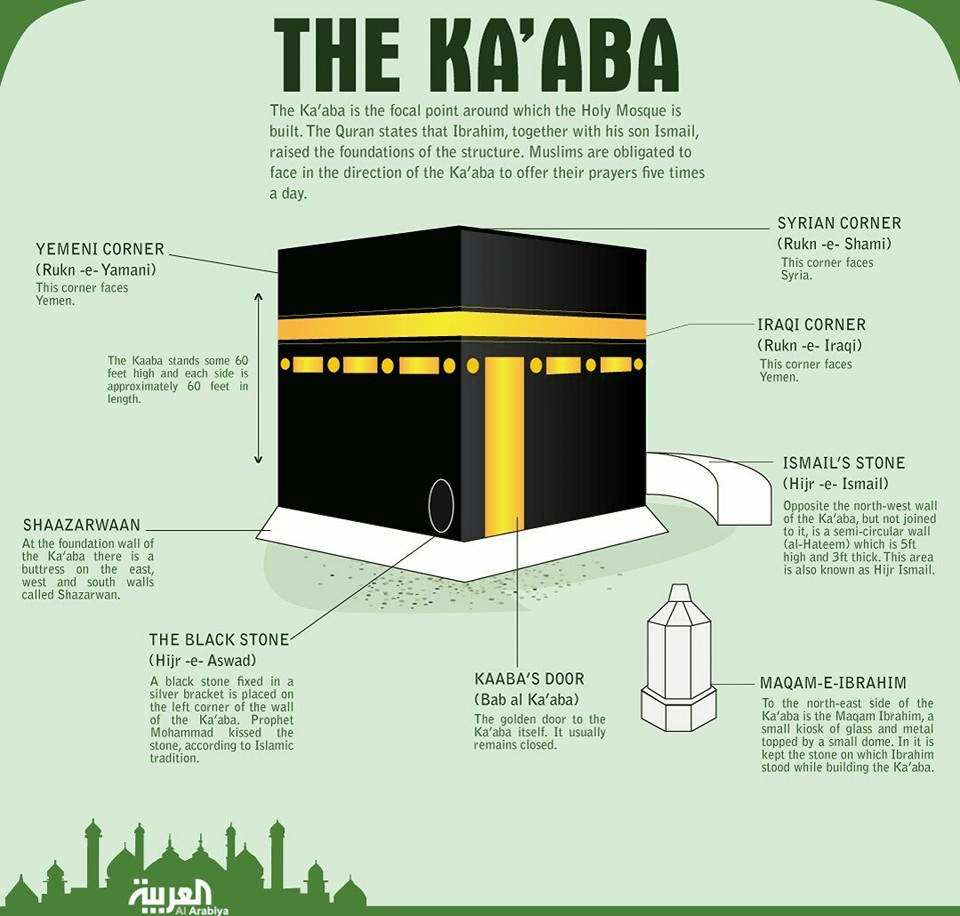
The area where pilgrims perform the Tawaf is known as ‘Mataf’. You can see a lot of sign boards at the Masjid Al-Haram that will guide you to the Mataf to perform your Tawaf.
Voluntary things that one can follow when reaching Masjid Al-Haram for the first time
For pilgrims traveling for Umrah / Hajj, seeing Kaaba for the very first time is an overwhelming experience which cannot be expressed by words. While entering Masjid Al-Haram, you may enter through multiple gates but make sure you set eyes at the Kaaba only from the front. Just keep your head low and keep walking till you reach the escalators that take you to the Mataf. Once you have reached down, look towards the outer walls of the Mataf to find the green light hanging (indicates the start line of Tawaf) or the other pilgrims that are performing Tawaf. Follow them till you reach the other side and then you can set your eyes at the Holy Kaaba.
You can raise both your hands and make any dua there before starting your Tawaf.
How to perform Tawaf?
Before starting Tawaf, men should uncover their right shoulder(Iztiba – إِضْطِبَاع) by placing the upper Ihram cloth under the right arm and over the left shoulder like this:
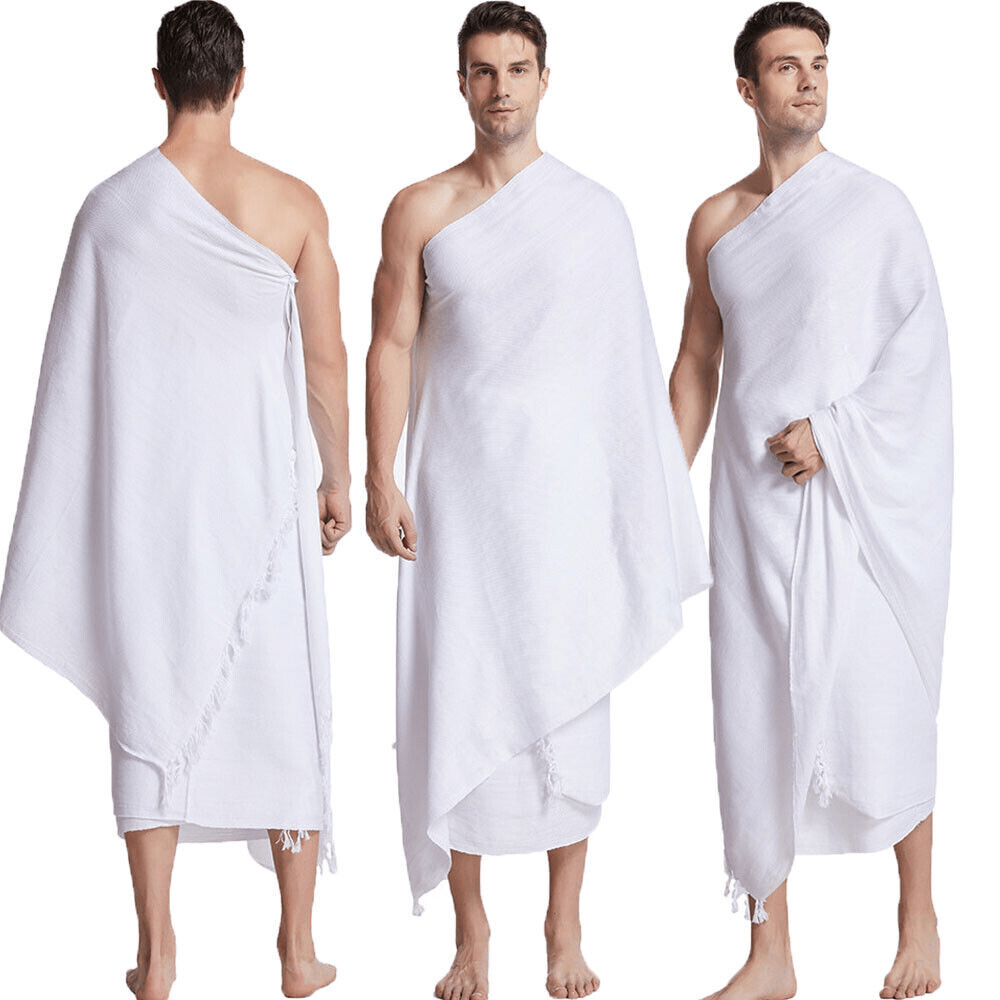
The seven rounds of Tawaf start and end in the Hijr-e-Aswad (Black Stone). Ensure you are in the state of Wudu before performing the Tawaf. In the first three rounds men are expected to walk briskly but depending on the crowd present in the Mataf.
Stand in line with the Black Stone(Hijr-e-Aswad) raise your right hand up facing the Hijr-e-Aswad and say (follow this every time you cross the black stone – 7 times):
Dua at the Start of Every Tawaf:
Bismillah, Allahu Akbar
بِسْمِ اللَّهِ وَاللَّهُ أَكْبَرُ
If you are closer to the black stone, it is sunnah to touch and kiss it or else you could just raise your hand and recite the above dua. If there are a lot of people and you are not able to identify where you are, look for the green tubelights hanging on the opposite side. It indicates the line parallel to the black stone from where one can start their Tawaf.
At the end of 7 rounds, you must refrain from saying the above dua while crossing the black stone as it will be considered the start of the 8th round.
You can recite any Duas, Quranic verses, or Dhikr when performing your Tawaf. You could also recite:
SubhanAllah, Alhamdulillah, Allahu Akbar (سُبْحَانَ اللَّهِ، الْحَمْدُ لِلَّهِ، اللَّهُ أَكْبَرُ)
Dua while crossing from Yemeni Corner to the Black Stone:
Rabbana atina fid-dunya hasanah wa fil-akhirati hasanah wa qina ‘adhaban-nar
رَبَّنَا آتِنَا فِي الدُّنْيَا حَسَنَةً وَفِي الْآخِرَةِ حَسَنَةً وَقِنَا عَذَابَ النَّارِ
– Surah Al-Baqarah 2:201
After completing the 7 rounds of Tawaf, it is Sunnah to perform 2 rak’ahs of Salah in front of the Maqam-e-Ibrahim.
Dua to recite when crossing Maqam-e-Ibrahim:
Wa-ttakhizu min maqaami Ibraheema musalla
وَاتَّخِذُوا مِن مَّقَامِ إِبْرَاهِيمَ مُصَلَّىٰ
– Surah Al-Baqarah 2:125
It is usually crowded, so try finding a place to pray behind the Maqam-e-Ibrahim, if not just try finding any place in the Mataf to pray the Salah.
How to pray two rak’ah of Salah:
The steps are similar to how we performed the Nafl namaaz for Ihram. In the first rak’ah recite the Surah Al-Kafiroon and in the second rak’ah recite Surah Al-Ikhlas. After praying you can make any dua as it is considered that Allah listens keenly to all our prayers there.
There are multiple Zam-Zam water dispensers kept around the Mataf and Masjid Al-Haram. Reach out to any one of the dispensers and drink zam-zam water after your namaz and dua is over. It is sunnah for men to pour a little zam-zam water over their heads
General suggestion : There are dispensers marked as ‘Not Cold’. Drink Zam-Zam water from there, as I have personally seen a lot of people drink Cold Zam-Zam water and end up having a throat infection over the next few days.
Either drink one, three or five glasses of Zam-Zam water before heading for Sa’i
Things to remember while performing Tawaf:
- As mentioned earlier, first three rounds it is recommended for men to walk briskly.
- In case your Wudu breaks in between your Tawaf, you need to go perform Wudu again and start the Tawaf from the beginning if you have only completed 3 rounds.
- If you have completed more than 3 rounds, you can restart the Tawaf from the count you left. For instance, if your Wudu breaks at the middle of the 5th round, you can go perform Wudu again before entering the Mataf and start the 5th round again from the Hijr-e-Aswad (Black Stone)
- There might be instances where it’s time for namaaz in between your Tawaf. You need to cover your right shoulder back with the Ihram and pray. Once the namaaz is over, you can uncover your right shoulder and resume your Tawaf
- There are no strict rules for reciting duas while performing Tawaf, you can recite any dua / Dhikr or Quranic verses that comes to your mind. Ensure you recite the necessary duas while crossing the Yemeni corner and at the start of the Tawaf near the Hijr-e-Aswad (Black Stone)
Step 3 : Sa’i
Sa’i is the act of walking back and forth seven times between the hills of Safa and Marwah inside Masjid al-Haram. It’s a key part of Umrah and Hajj, symbolizing Hajar (AS)’s perseverance and faith as she searched for water for her son, Prophet Ismail (AS). This powerful ritual reminds us of trust in Allah and the rewards of patience and determination.
The entrance to Mount Safa inside the Masjid Al-Haram is in the first floor and since the Mataf is in the ground floor, there is small slanting uphill walk from the Mataf to the entrance of the Mount Safa. The following dua needs to be recited during this walk
Du’a to recite while ascending to Mount Safa
Inna as-Safa wal-Marwata min sha’aairillah. Faman hajj al-bayta awi’tamara fala junaha ‘alayhi an yattawwafa bihima, wa man tatawwa’a khayran fa inna Allaha shakirun ‘alim
إِنَّ الصَّفَا وَالْمَرْوَةَ مِن شَعَائِرِ اللَّهِ فَمَنْ حَجَّ الْبَيْتَ أَوِ اعْتَمَرَ فَلَا جُنَاحَ عَلَيْهِ أَن يَطَّوَّفَ بِهِمَا وَمَن تَطَوَّعَ خَيْرًا فَإِنَّ اللَّهَ شَاكِرٌ عَلِيمٌ
– Surah Al-Baqarah 2:158
Nabda’u bimaa bada’a Allahu bihi
نَبْدَأُ بِمَا بَدَأَ اللَّهُ بِهِ
Once when you reach Mount Safa, you need to turn towards Kaaba, raise both your hands and recite the following dua three times.
Du’a to recite in Mount Safa while facing the Kaaba (3 times)
Allahu Akbar, La ilaha illallah, wahdahu la sharika lahu, lahul mulku walahul hamdu, yuhyi wa yumeetu, wa huwa ‘ala kulli shay’in qadeer.
اللَّهُ أَكْبَرُ، لا إِلٰهَ إِلَّا اللَّهُ وَحْدَهُ، لَا شَرِيكَ لَهُ، لَهُ الْمُلْكُ وَلَهُ الْحَمْدُ، يُحْيِي وَيُمِيتُ، وَهُوَ عَلَى كُلِّ شَيْءٍ قَدِيرٌ
La ilaha illallah wahdahu, anjaza wa’dahu, wa nasara ‘abdahu, wa hazamal ahzaba wahdahu.
لَا إِلٰهَ إِلَّا اللَّهُ وَحْدَهُ، أَنْجَزَ وَعْدَهُ، وَنَصَرَ عَبْدَهُ، وَهَزَمَ الْأَحْزَابَ وَحْدَهُ
Note: The same dua you can recite when you reach Mount Marwah while facing the Kaaba.
You can make any personal dua after reciting the above dua before starting your walk from Safa to Marwah.
As you begin walking from Safa to Marwah, you will notice green lights on the ceiling which look like this:
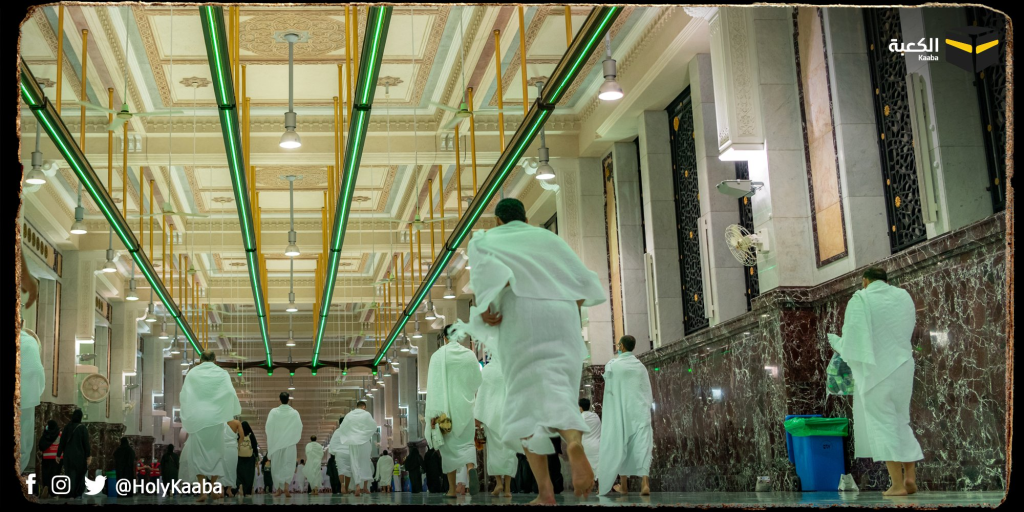
When Hajar (AS) was desperately searching for water for her son Ismail (AS), she ran through a low valley between Safa and Marwah because she couldn’t see him from there. To honor her struggle, the Prophet ﷺ and his companions also ran in this part during Sa’i, and that’s why men continue to do it today. The green lights mark this special section as a reminder of her perseverance and trust in Allah.
It is recommended for men to jog while passing these green lights while doing Sa’i
There is no specific mandatory dua for Sa’i, but you can recite various duas, dhikr, and personal supplications.
Things to remember while performing Sa’i
- Unlike Tawaf, in Sa’i when you walk from Mount Safa to Mount Marwah, one round is complete, which means if you return to Safa you have completed two rounds
- Sa’i starts in Safa and ends in Marwah at the end of seven rounds
- Whenever you cross the green light, it is recommended for men to jog or walk briskly.
- After completing Sa’i, it is Sunnah to pray two rak’ahs of Salah as a way of completing the ritual, just like how you prayed at the end of the Tawaf. You can pray anywhere in the Masjid Al-Haram after your Sa’i
Step 4: Tahallul
Tahallul(تَحلُّل) is the act of shaving or trimming your hair after finishing Umrah or Hajj. It’s a super important part of the rituals and has a deeper meaning: it symbolizes purifying your body and soul after completing the sacred acts of worship. It’s the final step that makes you feel like you’ve truly completed the pilgrimage.
Shaving the head, especially for men, is an act of humility and submission to Allah, as it demonstrates the surrender of one’s pride. It is a clear symbol of renewal and rebirth into a state of spiritual purity after completing the sacred rituals. For women, cutting a small portion of the hair at the end should be sufficient (around 1 inch hair)
A key point to remember is, if a pilgrim plans to perform multiple Umrah’s during their stay in Makkah, it is recommended to trim the hair equally and only in the last Umrah one can shave their head completely.
Du’a to recite after Tahallul
Rabbana taqabbal minna innaka antas-Sami’ul-Alim
رَبَّنَا تَقَبَّلْ مِنَّا إِنَّكَ أَنتَ السَّمِيعُ العَلِيمُ
Conclusion
You have successfully completed your Umrah once Tahallul is done. You no longer stay under the restrictions of the state of Ihram. There are some things I would like to share that I believe might be helpful for pilgrims going for the first time.
There are two boundaries around the Kaaba, one is the Haram Boundary and the second is the Ihram boundary. Consider them as two circles with Kaaba at the center.
If you need to perform a second Umrah but you are already in Makkah, you don’t need to travel all the way to the Miqat points mentioned earlier for getting into the state of Ihram. There are designated mosques in and around Makkah where you can travel to and perform your Niyyah for Ihram. One example is Masjid Al-Aisha (Taneem Mosque) which is a designated Miqat point for people performing Umrah from Makkah. The mosque is just 6kms away from Masjid Al-Haram and there are many modes of transport available such as Taxis and buses that take you to Masjid Al-Aisha.
Performing Umrah is a deeply spiritual journey, but the true essence of spirituality unfolds when you complete the Ziyarats in Makkah. Visiting the historic and holy sites helps you connect with the rich history of Islam and gain a deeper understanding of its profound legacy. There are many taxi drivers near Masjid Al-Haram who ask you if you need Ziyarats. I would highly recommend you to go for Ziyarats.
When you leave Makkah to your hometown, make sure you perform Tawaf Al-Wida(طواف الوداع). It’s the last ritual that pilgrims should do before leaving Masjid al-Haram. Tawaf al-Wida is like a heartfelt farewell. It’s an emotional moment as you circle the Kaaba for the last time, saying goodbye to the holy place and asking for forgiveness and blessings before you leave Makkah. You don’t need to do anything else like Sa’i or Tahallul after performing Tawaf Al-Wida.
Recommended things to keep handy while traveling for Umrah
- As you may have read about the procedure of Umrah, by now you might have understood that Umrah requires a lot of walking. For men, wearing Ihram and walking for long durations may cause friction between the inner thighs. I recommend you to apply Vaseline (non-scented) between your inner thighs after wearing Ihram
- I have personally seen many people from my group getting throat infections after accidentally drinking the cold Zam-Zam water or in general getting sick due to the change in water and weather. I recommend packing a few tablets such as Dolo or Paracetamol for fever and a cough syrup for throat infections.
- Performing Umrah is a mid-level physically challenging task. If you are someone who is physically weak I would recommend having some chewy Vitamin C tablets handy.
- Since women need to cut a small portion of their hair for Tahallul, I recommend bringing scissors but make sure you keep the scissors in the Check-in Luggage if you are travelling to Makkah by Air
- For men who intend to do multiple Umrahs during their stay in Makkah, I recommend carrying a trimmer along with you so that you can evenly trim your hair yourself.
- There are chances that you might sprain yourself while performing Umrah, so make sure you have a grip bandage, some pain killers and a pain relief ointment with you as well
With all that information that I have shared from my experience and knowledge, remember that Umrah is more than just a series of rituals – it’s a spiritual journey that brings you closer to Allah. Take your time, make heartfelt du’as, and let every moment be filled with peace and reflection. May your Umrah be accepted, and may you return home with a renewed soul and a heart full of gratitude.
Goodbye for now, and may Allah bless you always!
 Waiss Kharni
Leave a comment